Tabla.
Rhythm you can understand and play.
Tabla training may include rhythm fundamentals, taal, bols, timing, accompaniment and practical performance skills.
- Correct rhythm foundations
- Taal, bols and timing
- Listening and accompaniment
- Practice toward confident performance
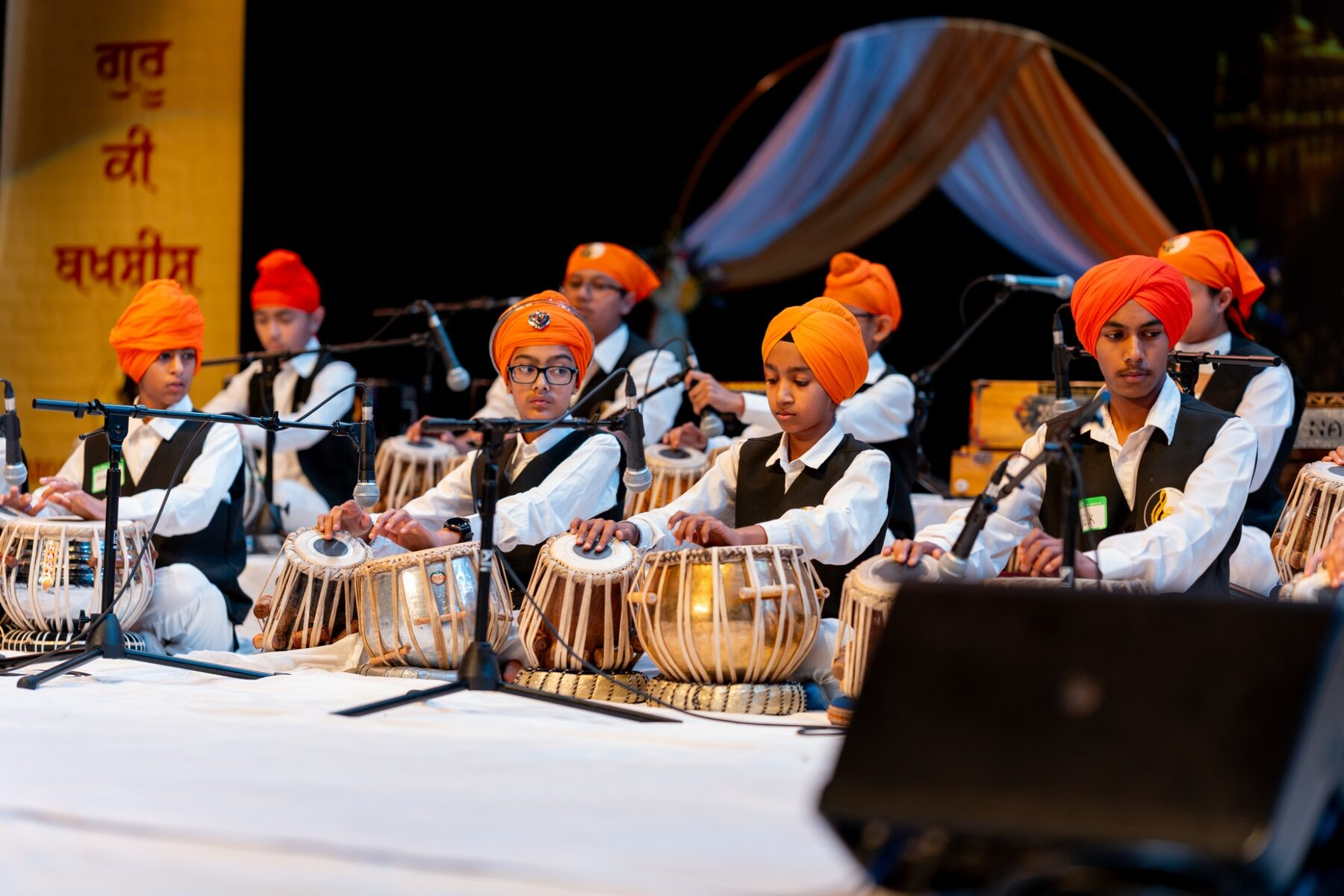
Build timing that others can rely on.
Learners develop control through bols, repeated rhythmic patterns and practical accompaniment. Group work encourages careful listening and confident musical response.
Tabla: a language spoken by the hands.
Tabla is the paired drum tradition associated with North Indian music: the smaller wooden dayan carries clearer pitched strokes, while the larger bayan adds a deep, expressive bass voice.
Its precise historical origin is debated, but its musical system is unmistakable. Individual strokes are remembered through spoken syllables called bols, then organized inside repeating time cycles called Taal. Students learn rhythm by hearing it, speaking it and finally placing it in the hands.
Within Kirtan and vocal accompaniment, tabla does more than keep time. It listens to the composition, supports the singer and helps the whole group move together.